Last updated November 18, 2026
ADU Builders Warning Signs Every Homeowner Should Know
The most predictive warning sign of an ADU project gone wrong isn’t a missing license. It’s a contractor who hands you a price range instead of a fixed number and calls it “honesty about variables.” That single behavior tells you more about how the next nine months will go than any reference list ever could. We’ve watched homeowners in Sunrise Manor sign with the smoothest talker in the room and spend the following year chasing a crew that never quite finished punch-list items. This guide teaches you to read contractor behavior like a blueprint: the five phrases that foreshadow change-order inflation, the three contract behaviors that signal flight risk, and the exact Nevada license check that takes under three minutes. By the end, you’ll know how to compare bids on a true apples-to-apples basis.
Quick Answer
The biggest ADU builder warning signs are a verbal price range instead of a fixed written number, a contract missing scope and payment schedules, a front-loaded deposit demand, an unverifiable Nevada license, and vague change-order language. Any one of these is fixable. Two or more together almost always predict a project that runs over budget or stalls altogether.
Table of Contents
- The Five Phrases That Predict Change-Order Inflation
- What a Legitimate Nevada ADU Contract Must Contain
- How to Verify a Nevada Contractor License in Under Three Minutes
- The “Disappeared After Deposit” Pattern
- Why the Cheapest Bid Is Often the Most Aggressive
- Comparing Bids Apples-to-Apples With Written Scope
- Red Flags You Can Spot on a Site Visit
The Five Phrases That Predict Change-Order Inflation
A change order is a written amendment to your contract that adds cost or time after work has started. It’s a normal part of construction – a hidden utility line or a homeowner who upgrades the windows mid-build legitimately changes the scope. But some contractors use change orders as a pricing strategy: bid low to win the job, then recover margin through a steady stream of add-ons once you’ve committed. The tell is verbal. Listen for these exact phrases.
- “We’ll figure that out on site.” Translation: an item we deliberately left out of the bid so we could bill it later. A real scope document accounts for unknowns up front.
- “That’s not in the base price.” Translation: the number you saw was never the real number. It usually appears the first week, once you’re committed.
- “Prices fluctuate, so we can’t lock it in.” Translation: your budget is now our cushion. Materials do move, but a written price can hold with contingency built in – a shrug is not a price.
- “The inspector is making us do extra work.” Translation: we didn’t pull the right permits or plan to code. Sunrise Manor falls under Clark County for permitting, and a competent ADU builder knows the requirements before bidding.
- “We can work something out on the back end.” Translation: nothing about money is written down, and nothing protects you if the relationship sours.
None of these phrases alone is damning. But a contractor who uses two or three of them in your first conversation is telling you exactly how the pricing will work. When we quote a project, the whole point of the Benson ADU Builders Sunrise Manor home approach is a written price before any work starts – so the number on the paper is the number on the invoice.
What a Legitimate Nevada ADU Contract Must Contain
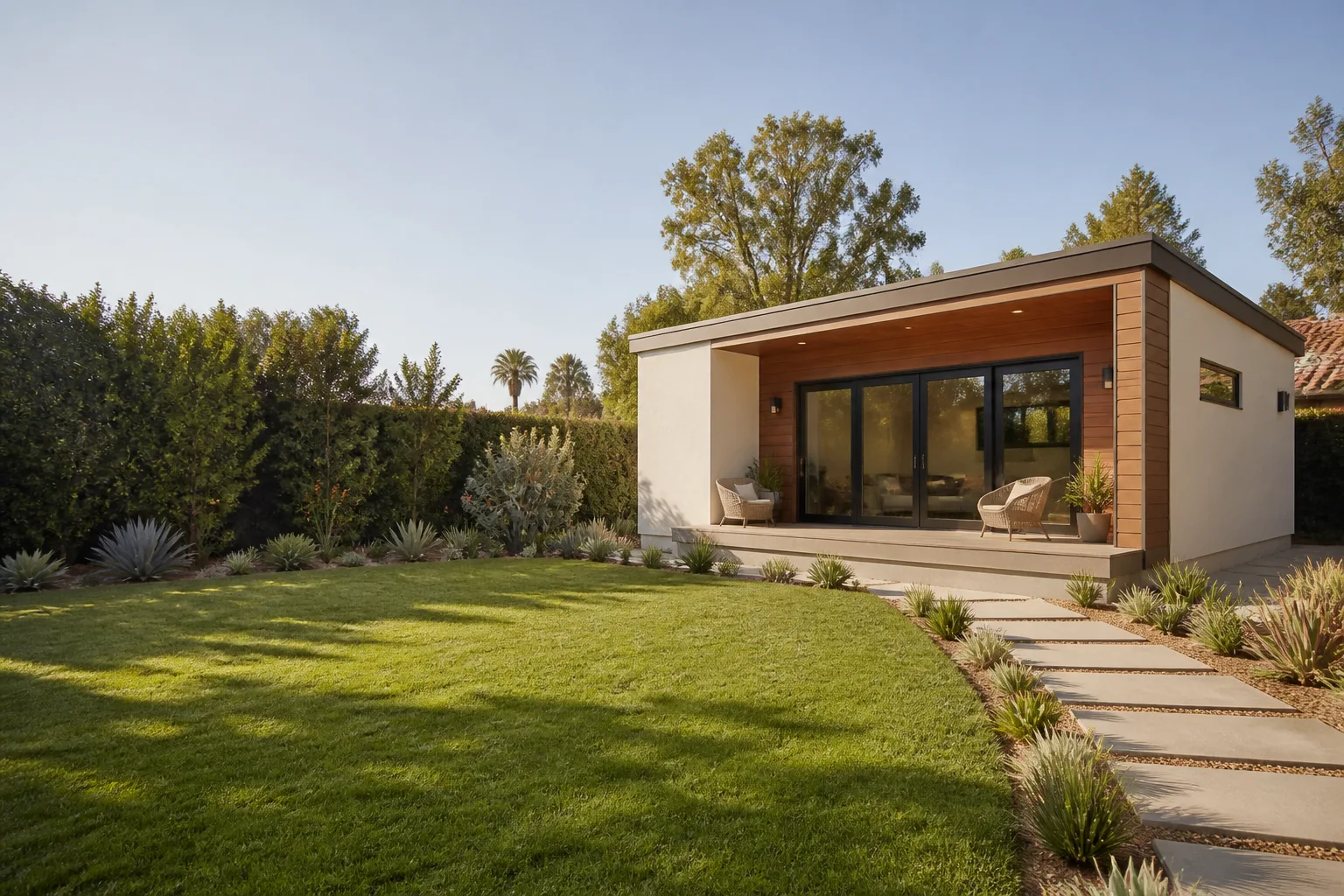
An ADU is a secondary dwelling on your property – a detached cottage, a garage conversion, or a JADU (junior ADU) inside the main house. In Nevada, an ADU contract should read less like a handshake and more like a map. Here’s what a real one contains versus what a problem contractor leaves out.
What must be in it
- A written, itemized price. Not a range. Fixed line items: site work, foundation, framing, utilities, finishes, permits. A range is what you get when the contractor hasn’t done the takeoff.
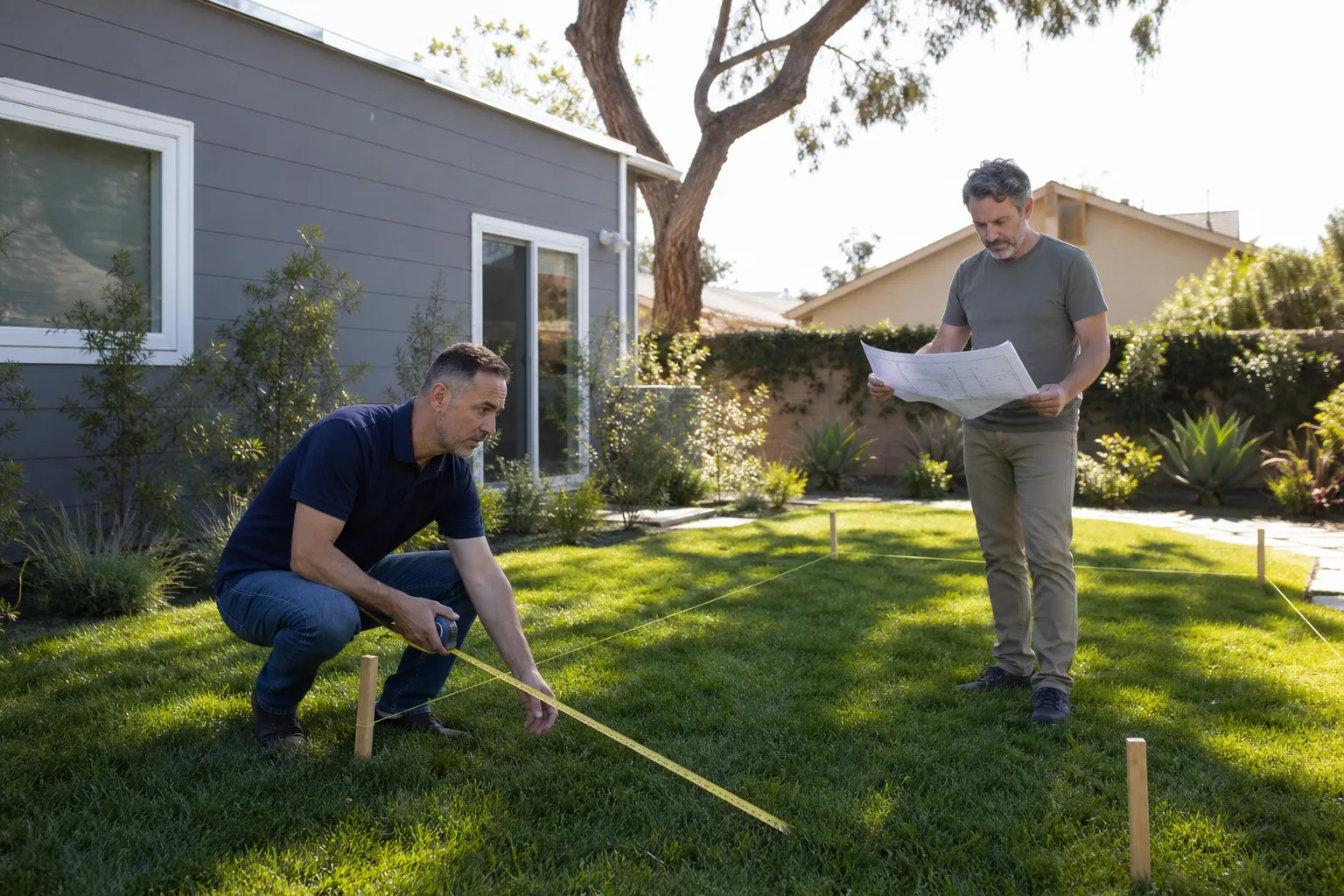
- A defined scope of work. Square footage, bedroom and bathroom counts, included finishes, and – critically – what is excluded.
- A payment schedule tied to milestones. More on this below; front-loading is a red flag.
- The contractor’s Nevada license number and classification, plus your signature acknowledging it.
- A change-order process in writing: who initiates it, how it’s priced, and that no work proceeds without your signed approval.
- A warranty and guarantee clause with a duration spelled out.
What problem contractors omit
- A fixed price, replacing it with “cost plus” language and no cap.
- Any mention of permits or who pulls them (hint: it should be the contractor).
- The schedule for substantial completion, leaving the finish date open.
- Warranty terms – or a verbal “we stand behind our work” with nothing in writing.
If a proposal you’re reading is four paragraphs long and full of “to be determined,” stop. Compare it against what real ADU contracts look like before you sign anything. Our ADU Builders in Sunrise Manor team puts the whole plan and price on paper from the first conversation precisely because the gaps above are where projects go sideways.
How to Verify a Nevada Contractor License in Under Three Minutes
Nevada licenses contractors through the Nevada State Contractors Board (NSCB), and you can check any license online in minutes. This is the one verification step no homeowner should skip. Here’s the sequence.
- Ask for the license number and classification in writing. Don’t accept a name and a photograph of a truck.
- Look it up on the NSCB licensee search. Enter the number, not the company name – names get reused.
- Confirm the license is active and in good standing, not suspended or expired.
- Match the classification to your project. Nevada uses letter classifications for contractor work, and residential construction categories cover different scopes. An ADU includes a new dwelling unit, electrical, plumbing, and structural work – confirm the contractor is licensed for the applicable residential classification before signing.
- Check the qualifying person and the bond. The license should name a qualifying individual, and the contractor should carry a surety bond and insurance. Ask to see current certificates.
Three minutes of checking protects a five- or six-figure budget. If a contractor hesitates, deflects with “our paperwork is at the office,” or tells you to trust them, that’s your answer. He’s telling you he’s telling you something. When we connect you with a local pro, that pro is licensed and insured as their state requires – and that’s the standard every homeowner in Sunrise Manor should expect.
The “Disappeared After Deposit” Pattern
This is the headline horror story: a homeowner hands over a big check, and the crew never comes back. It doesn’t happen by accident – it’s built into how a contractor structures the money. Payment schedule is the clearest window into how a builder is financed.
What a healthy payment schedule looks like
- A modest deposit that covers start-up costs and permits.
- Milestone payments – foundation, framing, rough-in, finish – as the work visibly progresses.
- A meaningful final payment held until punch-list items are closed and the final inspection passes.
What a flight-risk structure looks like
- 30% to 50% up front with no milestone documentation behind it. That money isn’t your project’s budget – it’s funding the contractor’s next job (or last one).
- Payments tied to calendar dates rather than completed phases, so you’re paying for work that isn’t done.
- Cash requests without a receipt or a written change order.
If the money runs ahead of the work, you’re financing someone else’s risk. In Sunrise Manor, we’ve seen homeowners pay 40% before the permit was even pulled, then watch the builder go quiet for three weeks. A written schedule tied to visible milestones, with photos at each stage, prevents this entire category of disaster.
Why the Cheapest Bid Is Often the Most Aggressive
Three bids land on your table. Two are in a similar neighborhood; one is dramatically lower. The instinct is to reward the low bid. The math is different: the cheapest bid is very often the contractor with the most aggressive change-order strategy, and the total you pay ends up the highest of the three.
Here’s why. A low bid wins on a price the contractor knows isn’t complete. That missing scope – an allowance for utilities, a stripped finish package, a foundation not yet confirmed, permits not included – comes back as add-ons once you’re committed and the crew is on site. By then you’ve lost comparative leverage. A $90,000 bid that grows to $120,000 costs more than a $105,000 bid that stays put.
The way to compare is on scope, not on the bottom number. Two bids only compare if they cover the same line items at the same level of specification. A fair competition means each contractor has done a takeoff and put the same thing on paper. Then the numbers actually mean something. Modern prefab ADU options from brands like Dvele, Mighty Buildings, and Plant Prefab can help here – their factory-built panels arrive pre-engineered, so costs are more predictable and the scope is easier to pin to a fixed number. Options you can research independently give you a real way to benchmark quality.
Comparing Bids Apples-to-Apples With Written Scope
The honest way to shop for an ADU is to force every bid into one shared structure. Here’s the process we recommend, and it’s the same structure that governs a Home Addition Contractor in Sunrise Manor project, since the two share nearly every trade.
- Request the same line items from every bidder: site work, foundation, framing, electrical, plumbing, HVAC, finishes, permits, and total.
- Ask each contractor to specify exclusions in writing. The exclusions are where the surprises hide.
- Get the finish package defined. “Builder-grade” is not a spec. Itemize flooring, cabinets, and fixtures.
- Separate allowances from fixed costs. An allowance is a budgeted placeholder that adjusts to real cost; a fixed cost doesn’t move. Know which numbers are which.
- Compare the payment schedules, not just the total. Two identical totals with wildly different deposit structures are two different risk profiles.
- Rank the bids on scope completeness first, price second.
Do that, and you’ll find the “expensive” bid often wins on true cost. It’s less exciting than a low number, but the project finishes at the price you planned for. That’s the whole point – and it’s why a Room Addition Contractor in Sunrise Manor treated the same way gives you a way to test any builder before committing.
Red Flags You Can Spot on a Site Visit
Contractor red flags aren’t only in words and paperwork. Some are visible the moment you walk a project site or a showroom. Sunrise Manor’s high-desert climate – scorching summers, cool winter nights, intense sun – punishes shortcuts in insulation, weatherproofing, and shade planning, so ask how the design handles the local climate. In our experience, the builders who plan for desert heat instead of a generic national spec avoid the biggest quality problems down the line.
- No written plan on site. A serious crew builds to drawings and a posted schedule. No plan means no accountability.
- Unclear crew identity. Ask who’s on your property. Background-checked, uniformed technicians should be the norm, not a surprise – you should always know who’s walking onto your lot.
- No photographs of progress. If you’re waiting on updates and getting voicemail, that’s a communication red flag as much as a construction one.
- Change orders handed to you as fait accompli. Work already completed, bill already invoiced. That’s not a change-order process; it’s leverage.
A builder who answers every one of these cleanly is signaling that the paperwork part will be clean too. The opposite is also true.
Common Mistakes to Avoid
- Signing a verbal estimate. If it isn’t written, it doesn’t exist. A verbal number shifts at the door; a written price holds.
- Skipping the license check. Three minutes on the NSCB site beats a year of buyer’s remorse. Do it before the first deposit.
- Letting schedule beat price discipline. A fast start with a front-loaded deposit is not the same as a fast finish. Compare schedules, not just opening dates.
- Choosing on the lowest bid alone. Low bid plus unlisted scope equals high final cost. Compare scope first.
- Ignoring climate planning. Sunrise Manor’s desert heat makes insulation and weatherproofing decisions that a generic spec skips. Ask how the design handles it.
- Accepting a warranty in words only. If the guarantee isn’t written and stamped onto the project, it’s a promise floating on a handshake. Ask for it on paper.
- Paying in cash without receipts. Every dollar should move with documentation. No receipt, no payment.
When to Call a Professional
Some of this you can thoroughly vet yourself. The license check, the bid comparison, the contract review – all doable. But a few situations call for a professional conversation. If you’ve received a bid with a range instead of a fixed number, if a contractor is asking for a deposit before the permit is pulled, if a proposal has no written payment schedule, or if you simply want a second opinion on whether the scope you’re being shown is complete – those are the moments to get a builder on the phone. You don’t need to know the whole trade to ask a good question. We’ve seen the difference between a homeowner who signed blind and one who asked three sharp questions before signing. The second one always has a smoother project. Benson ADU Builders Sunrise Manor offers free estimates in Sunrise Manor – call (844) 719-3308.
Frequently Asked Questions

A verbal price range instead of a fixed written number. A contractor who won’t commit to a written price is leaving room to raise cost later through change orders, and it’s the clearest early warning of an ADU project that goes over budget. Call (844) 719-3308 for a written estimate before you sign with anyone.
Look the license number up on the Nevada State Contractors Board website. Confirm it’s active and in good standing, and that the classification covers your residential ADU work – then ask for the bond and insurance certificates. It takes about three minutes.
A healthy deposit is modest and covers start-up costs and permits, followed by milestone payments for completed phases and a final payment held until punch-list closeout. Anything at or above 30% to 50% up front, before documentation, is a warning sign. Call (844) 719-3308 to compare payment schedules on a free estimate.
A low bid usually leaves scope out, and that missing scope returns as change orders once you’re committed. Compare bids on itemized written scope, not the bottom number. Call (844) 719-3308 if you want a bid reviewed line by line.
Yes. The high-desert heat and intense sun make insulation, weatherproofing, and shade planning real cost and quality decisions. A builder who plans for the local climate from the start avoids problems that show up in year two. Call (844) 719-3308 to talk through design specifics for your lot.
Ask for a written workmanship guarantee with a stated duration and a written promise to make any covered repair right. Get it stamped into the contract. A guarantee that only lives in conversation isn’t a guarantee. Call (844) 719-3308 to see exactly what our written guarantee covers.
The Bottom Line
Bad ADU builders don’t announce themselves. They hand you a range and call it honesty, leave scope out of the contract, front-load the deposit, and profit on change orders once you’re committed. The good news: every one of those behaviors is visible before a permit is pulled – in the phrases they use, the omissions in their contract, the money they ask for up front, and the bids they avoid competing honestly. Read the behavior, verify the license, compare the scope. Do that and you’ll pick a builder who finishes at the price you planned. For a written price before any work starts, call (844) 719-3308 for a free estimate.
Written by the team at Benson ADU Builders Sunrise Manor.