Last updated November 18, 2026
ADU Emergency Preparedness Guide for Sunrise Manor Homes
If the main house gas line is compromised in an earthquake or a gas leak, can your ADU tenant shut off service from outside without entering the main house? In most Sunrise Manor ADU configurations we’ve walked through, the answer is no. And that’s a code-compliant installation that is still an emergency planning failure. The problem isn’t the build. It’s that almost every household emergency plan treats the property as one structure, when an ADU actually creates two occupied buildings sharing one lot, one utility feed, and one insurance policy. This guide maps the shutoffs, the hazards, and the insurance gaps specific to Sunrise Manor, and shows you how to close them before you need to.
Quick Answer
An ADU emergency plan for Sunrise Manor has to treat the main house and the accessory unit as two separate occupied structures sharing one lot, which means separate shutoff knowledge, a two-building evacuation plan, and an insurance policy that actually covers the ADU at replacement cost rather than a 10% detached-structure sublimit. The three highest-risk gaps are gas shutoff access between structures, extreme-heat power outages (the ADU heats up faster than the main house), and monsoon flash flooding in Clark County. Close those three first.
Table of Contents
- Why an ADU Is Two Structures, Not One
- Map Every Utility Shutoff Before You Need It
- Extreme Heat and Power Outages in Sunrise Manor
- Flash Floods and Seismic Risk in Clark County
- The Insurance Gap Most ADU Owners Miss
- Two-Structure Evacuation Plan Template
- NVEnergy, Southwest Gas, and Smart Meter Shutoffs
- The Shared Emergency Binder
Why an ADU Is Two Structures, Not One
An ADU is a second dwelling unit on a single parcel. Under Nevada rules and the way most Sunrise Manor lots are platted, that means two kitchens, two sleeping areas, potentially two meters, and two sets of people who may not be awake at the same time when something goes wrong. The electrical sub-panel for the ADU is usually fed from the main service, the gas may run from one meter or two, and the water shutoff for the unit might be under a hose bib on the far side of the main house.
That single-lot, two-structure reality is what trips people up. A standard household plan assumes everyone is in one building and one person can shut everything down. In an ADU setup, the person who knows where the gas valve lives might be in the ADU, and the valve might be on the main house wall. We’ve seen this exact gap in new builds and in conversions alike, including prefab installs from Benson ADU Builders Sunrise Manor home where the utility connections were done correctly but never mapped for the occupants.
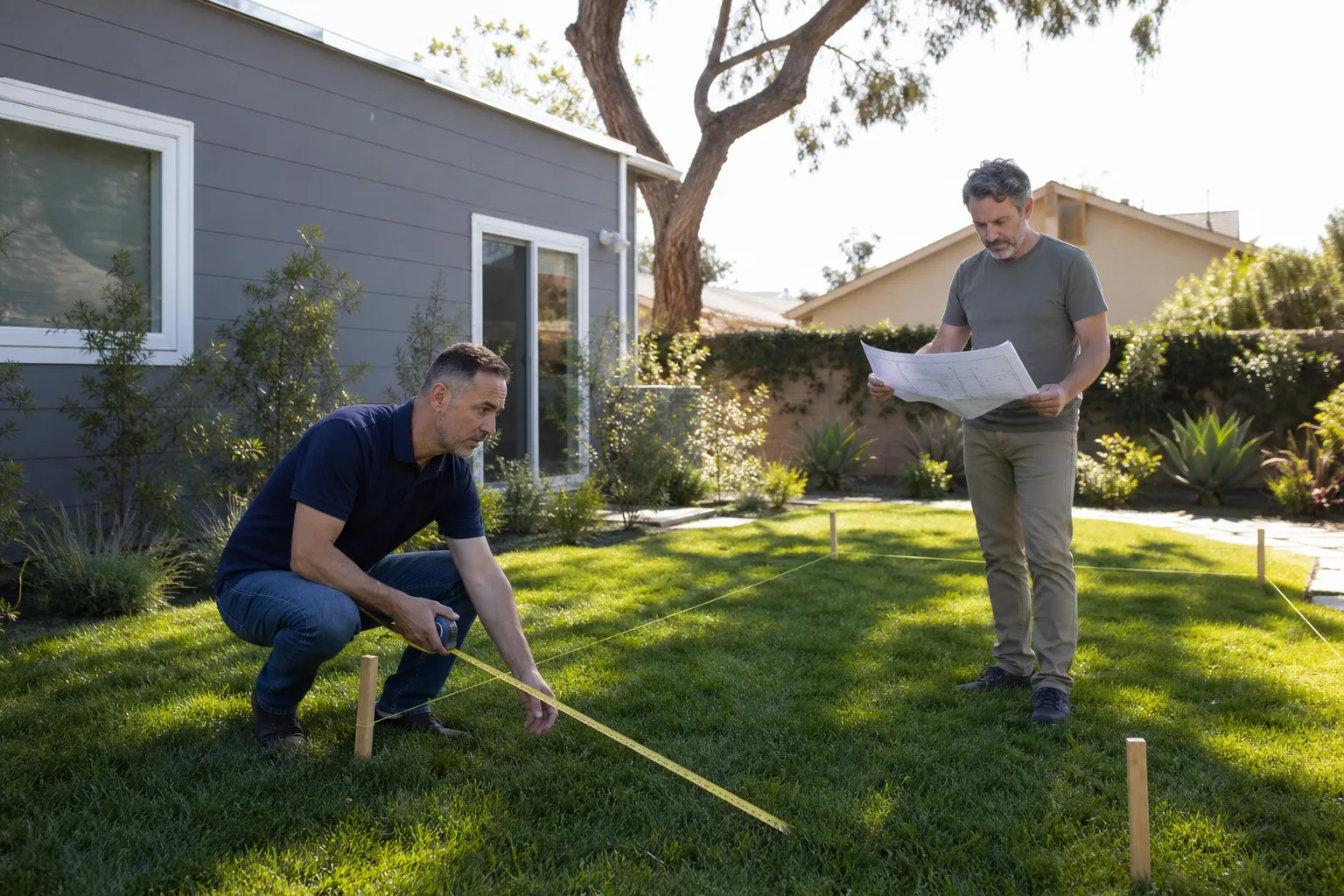
Start by drawing a simple one-page site plan of your property. Mark both structures, both meters, both panels, both water shutoffs, and the gas valve. Label who is responsible for each. Tape it inside both units. That single sheet is the foundation of everything else in this guide.
Map Every Utility Shutoff Before You Need It
This is the section that saves lives and prevents the most expensive damage. Walk your property with a flashlight at night, once, and mark every shutoff. Here’s what to find:
- Gas meter(s): Determine whether your ADU runs off a shared meter or its own. If shared, there is one shutoff valve, usually a quarter-turn ball valve at the meter. If separate, there are two. Confirm which serves which unit by having someone inside each building turn on a burner while you watch the meter dial.
- Gas shutoff tool: Keep a dedicated gas shutoff wrench (a 12-inch adjustable or a non-sparking gas valve wrench) zip-tied next to the valve, not in a drawer inside the house. If the valve is on the main house and the ADU occupant needs it, that wrench has to be reachable from outside.
- Electrical panel vs. sub-panel: Most ADUs have a sub-panel fed from the main service panel. Label both clearly. The sub-panel shuts off the ADU only; the main panel shuts off everything. Know which breaker kills the ADU’s heat pump or mini-split before you need to isolate it.
- Water shutoff at the structure: Every ADU should have a local shutoff valve where the water line enters the unit. Confirm it exists and turns freely. If it’s a gate valve that hasn’t been turned in two years, exercise it now.
- Water shutoff at the meter: The master valve at the meter box kills the whole property. Keep a meter key or a long-handled shutoff tool on-site, and show the ADU occupant where it lives.
Photograph every shutoff with your phone, label the photos (“ADU gas valve, north wall of main house”), and drop them into the shared emergency binder we cover below. When you’re ready to add a unit or reconfigure utilities, the contractors who handle ADU Builders in Sunrise Manor work should be able to hand you a marked utility diagram, not a shrug. Ask for one before the final walk-through.
Extreme Heat and Power Outages in Sunrise Manor
A Sunrise Manor summer routinely pushes past 110°F, and the ADU is the structure that gets dangerous fastest when the grid goes down. Smaller square footage means less thermal mass, so the unit heats up quicker than the main house and offers fewer cool corners to retreat to. If your ADU tenant is older, or the unit is used by a family member who needs a stable temperature, a summer outage is a genuine health event, not an inconvenience.
The protocol for a heat-driven outage:
- Trigger the check at 85°F indoors. Handheld thermometer in each unit. If the ADU hits 85 and the power is out, the occupant moves to the main house or a cooling center.
- Know the cooling centers. Clark County activates cooling stations during extended heat events. Store the current list in the binder and refresh it each May.
- Backup power sized to the ADU, not the whole house. A small portable power station running a fan and a phone charger buys hours. A whole-house generator is a bigger decision; many Sunrise Manor owners size backup for the main house fridge and the ADU mini-split together.
- Keep water in both units. Two gallons per person per day, stored in the ADU as well as the house, because the ADU occupant shouldn’t have to cross the yard in a heat event to drink.
Newer prefab units from brands like Boxabl and Mighty Buildings often have tighter, better-insulated envelopes than a site-built conversion, which stretches the cool-down window. Even so, no insulation replaces a plan. Test the plan once each June by shutting the ADU breaker for an hour and walking the response.
Flash Floods and Seismic Risk in Clark County
Monsoon season runs roughly July through September in Southern Nevada, and the washes and streets around Sunrise Manor can flash flood with little warning. Water reaches an ADU fast because the unit often sits lower than the main house or near a side yard that drains toward it. The seismic risk is smaller but real; the Las Vegas Valley has active fault systems, and a moderate quake can crack a gas line at the meter even if nothing else moves.
Flood readiness for a two-structure lot:
- Know which way water drains across your parcel and whether your ADU sits in that path.
- Keep sandbags or a water-diversion barrier near the ADU’s likely entry point during monsoon months.
- Move the ADU’s electrical sub-panel and any exterior outlets above expected flood depth, or at minimum confirm they’re on a GFCI circuit.
- Store important documents and electronics in the ADU above floor level, not in a closet that touches the slab.
Seismic readiness is mostly about gas. Know where the valve is, keep the wrench on the wall, and shut off gas if you smell it or hear hissing after a quake. Do not relight pilots yourself; call Southwest Gas. If you’re building a new unit, ask about flexible gas connectors at the appliance, which tolerate movement better than rigid pipe. That detail comes up in Home Addition Contractor in Sunrise Manor conversations, and a good builder will raise it before you do.
The Insurance Gap Most ADU Owners Miss
Here’s the gap that surfaces after the emergency, not during it. Most standard homeowner policies treat an ADU as a “detached structure” or “other structure” and cap coverage at a sublimit, often 10% of your dwelling coverage. If your main house is insured for $400,000, that 10% sublimit is $40,000 for the ADU. A fire or flood that guts the unit usually costs far more than that to rebuild.
How to find out what you have:
- Pull your declarations page and look for “Coverage B: Other Structures.” Read the limit. Compare it to what it would actually cost to rebuild the ADU.
- Call your agent and ask directly: is the ADU covered as a detached structure, or is it scheduled as a separate dwelling? The two are very different.
- Ask for an ADU endorsement or a separate dwelling policy that covers the unit at replacement cost, plus loss of rental income if it’s rented.
- If the ADU is rented, confirm liability coverage extends to a tenant-occupied unit. A standard policy often excludes business or rental use without an endorsement.
Do this before the unit is occupied, not after. A Sunrise Manor homeowner we worked with discovered their sublimit was $35,000 on a unit that would cost well over $150,000 to rebuild. The fix was a phone call and a rider. The fix after a fire is a lawsuit or a loan.
Two-Structure Evacuation Plan Template
An evacuation plan for a single house has one exit route and one meeting point. For an ADU property, you need two of everything, plus a way for the two households to talk to each other. Use this template:
- Primary exit for the main house: the front door, with a clear path and no furniture blocking it.
- Primary exit for the ADU: its own door, with the path to the street marked and lit.
- Secondary exit for each structure: a window or back door that’s operable from inside without a key. Test it.
- Meeting point A: a spot at the front of the property, visible from both structures, so occupants know who got out.
- Meeting point B: a neighbor’s porch or a fixed landmark a few houses away, in case meeting point A is blocked.
- Coordination protocol: who checks on whom. Write down that the main house occupant knocks on the ADU door on the way out, and the ADU occupant does the same on the way past. One sentence, both directions.
- Communication: a group text thread with both households. If phones are down, the meeting points do the work.
Practice the drill twice a year, once in spring before monsoon and once in fall before heating season. A plan that’s never been walked is a plan that fails. Homeowners planning a new unit through Room Addition Contractor in Sunrise Manor should build the drill into the first month after move-in, while everyone is still learning the property.
NVEnergy, Southwest Gas, and Smart Meter Shutoffs
Both of your major utilities have emergency protocols, and knowing them changes how you respond. For a gas smell, Southwest Gas asks that you leave the area, don’t flip switches or use phones near the leak, don’t try to relight anything, and call their emergency line from a safe distance. If the smell is strong or you hear hissing, call 911 first. Do not wait to “see if it clears.”
Smart meters have changed the response picture. Many newer gas meters can be shut off remotely by the utility, which means the right move in a gas event is to get everyone out and call the utility, not to hunt for the valve yourself in the dark. If you do shut off your own gas valve, the utility typically has to come back out to restore service, so treat the valve as a last resort and the phone call as the first move. NVEnergy can also manage outages on its side remotely; your job is to know whether your outage is property-wide or just your service drop, which you can confirm by checking whether the neighbors’ lights are also out.
Post both emergency numbers inside both units and in the binder. Pre-load them in every phone on the property. If you’re adding an ADU and want the utility connections and emergency documentation handled cleanly, ask for a written utilities diagram at final walk-through, which is the same standard we hold to under The Relay Visibility Guarantee.
The Shared Emergency Binder
Every ADU property needs one binder, stored in a waterproof container, in a location both households can reach without entering the other structure. That last part is the whole point. If the binder lives in the main house kitchen and the main house is on fire, the ADU occupant has nothing.
Store it in a waterproof box mounted on the exterior of the ADU, or in a shared carport or shed that’s accessible from outside both units. Include:
- The site plan with every shutoff marked and labeled.
- Photographs of each shutoff and each panel, with labels.
- Utility emergency numbers, cooling center list (refreshed each May), and poison control.
- The insurance declarations page and your agent’s direct line.
- The evacuation plan and the drill dates you’ve practiced.
- A printed copy of the ADU’s warranty and build documentation, so a repair or insurance claim can be filed without hunting through email.
Refresh the binder each spring and fall alongside the drill. It’s a fifteen-minute task that turns a crisis into a checklist.
Common Mistakes to Avoid
- Treating the property as one structure. If your plan assumes everyone is in the main house, the ADU occupant is unaccounted for. Write two exit routes, not one.
- Storing the gas shutoff wrench inside a house. If the wrench is in a kitchen drawer and the kitchen is the problem, you can’t shut off gas. Mount it outside, next to the valve.
- Not labeling the sub-panel. In a heat-driven outage, knowing which breaker kills the ADU mini-split at 2 a.m. matters. Label every breaker in plain English.
- Assuming the insurance sublimit is enough. The 10% detached-structure cap rarely matches rebuild cost. Check the declarations page.
- Skipping the heat plan for a rental ADU. A Sunrise Manor tenant in an ADU with a dead mini-split in July is a health event and a liability. Set the 85°F trigger and the cooling-center route now.
- No flood diversion during monsoon. Water routes toward the ADU in many side-yard layouts. Add sandbags or a barrier in July, not after the first wash floods the unit.
- Never practicing. A plan that lives only on paper fails in the dark. Drill twice a year.
When to Call a Professional
Call a licensed professional for anything involving gas line work, panel upgrades, sub-panel additions, or structural changes, because these carry real injury risk and permit requirements, and a mistake can be catastrophic. Do not attempt to relocate a gas meter, add a sub-panel, or reroute a gas line yourself, even if the job looks small. If your ADU is new or being planned and you don’t have a labeled utility diagram, that’s a professional conversation too. Benson ADU Builders Sunrise Manor offers free estimates in Sunrise Manor, and every project comes with a written price before work starts, a 365-Day Done Right Promise, and background-checked, uniformed technicians. Call (844) 719-3308 for a free estimate.
Frequently Asked Questions
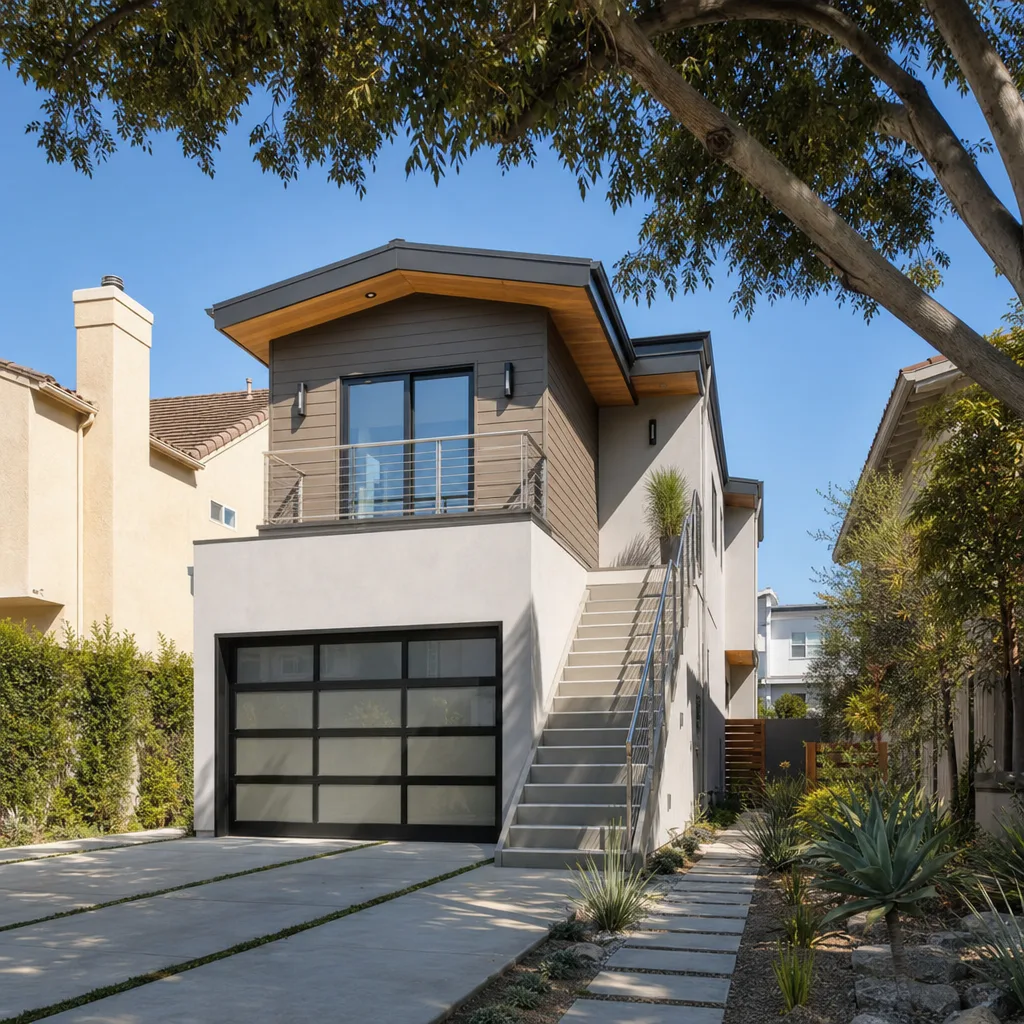
In many Sunrise Manor ADU configurations, no, because the gas meter and shutoff valve are on the main house wall. The fix is to confirm your meter setup, mount a dedicated gas shutoff wrench outside next to the valve, and – if the layout forces it – ask a licensed contractor whether a separate accessible shutoff can be added for the ADU. Until then, the tenant’s protocol is to evacuate and call Southwest Gas or 911 from a safe distance. Call (844) 719-3308 for an assessment.
Usually it covers the ADU as a detached structure, but at a sublimit that’s often 10% of your dwelling coverage, which may be far less than rebuild cost. Check your declarations page for “Coverage B: Other Structures,” then ask your agent about an ADU endorsement or a separate dwelling policy that covers replacement cost. For a rental ADU, confirm liability and loss-of-rental coverage too.
Costs vary by scope, but typical ranges run $400-$1,200 for a dedicated gas shutoff accessibility upgrade and labeled panels, $200-$600 for a heat and flood readiness kit including a portable power station and sandbags, and $150-$400 for a shared emergency binder setup with a waterproof exterior mount. Call (844) 719-3308 for an exact quote; estimates are free.
Yes. An ADU has less interior square footage and less thermal mass, so it heats up faster when the power fails. Set a hard trigger at 85°F indoors, keep two gallons of water per person inside the unit, and know the nearest Clark County cooling center before monsoon season.
The site plan with every shutoff labeled, photographs of each shutoff and panel, utility and emergency numbers, the cooling-center list, your insurance declarations page, the evacuation plan with drill dates, and the ADU’s build and warranty documents. Store the whole thing in a waterproof container reachable from outside both structures.
Often, yes. Many newer smart meters can be shut off remotely by Southwest Gas, which means the correct response to a gas smell is to evacuate and call the utility or 911, not to hunt for the valve in the dark. If you do shut off your own valve, the utility typically has to restore service in person, so treat your valve as a last resort. Call (844) 719-3308 if you want a labeled emergency utility plan built into your ADU project.
The Bottom Line
An ADU makes your Sunrise Manor property two occupied structures sharing one lot, one utility feed, and one insurance policy, and the gaps that matter are the ones that surface mid-emergency: which shutoff serves which unit, whether the ADU occupant can reach a gas wrench from outside, how fast the smaller unit heats up when the grid fails, how monsoon water routes across the yard, and whether the insurance sublimit would actually rebuild the unit. Map the shutoffs, label the panels, check the declarations page, set the 85°F heat trigger, and store one shared binder in a waterproof container outside both units. Do it once, drill it twice a year, and the plan holds. For help getting the build and the documentation right from the start, call (844) 719-3308 for a free estimate.
Written by the team at Benson ADU Builders Sunrise Manor.